Cars and vans › Brakes › Symptoms
Brake drag
A brake that does not fully let go after you lift off the pedal.
A dragging brake keeps pressing the friction material against the disc or drum while you drive, so the car slows itself, burns more fuel and heats up one or more wheels1,2,3. It often comes and goes, which makes it hard to pin down: the fault is usually only measurable while it is happening2. Because a brake has to do several things correctly in order to let go, very different faults produce the same feeling, and the most useful first question is which wheels are affected.
Is it really dragging?
Before looking for a cause it is worth making sure a brake is actually staying on, since a noise or a pull to one side has many other explanations. A brake that drags turns motion into heat all the time, so the clearest evidence is one wheel running much hotter than the others. Drive for ten or fifteen minutes without braking hard, stop, and straight away compare the discs or rims of all four wheels, ideally with an infrared thermometer, since touch only tells you that something is hot, not how much hotter than the other side it is. An A4 owner measured 205 °F on one side against about 150 °F on the other after twenty miles4. What counts is the difference between the wheels of one axle, not any single figure.
A second check needs no tools. Lift each wheel and turn it by hand, then compare left with right, because a dragging wheel is noticeably harder to turn5,3. Other signs that point the same way are a burning smell or heavy brake dust on one wheel6, a pull to one side when stopping7, and fuel use that climbs by one or two litres per 100 km3,8.
Some things feel similar and are not drag. Pads or shoes that have rusted or frozen to the disc or drum after standing make the car lurch or refuse to move at first, then usually drive normally9,10. A stone stuck at the disc makes a grinding noise and cuts a groove11, but it does not hold the brake on.
Causes
All causes8
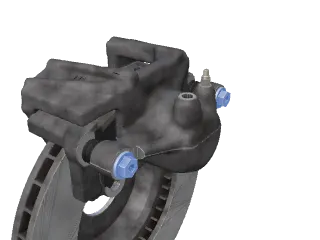
One wheel or both rears · disc brakes whose clamp slides on pins
The caliper can no longer slide on its pins, so it cannot centre itself after braking and one pad keeps rubbing. The giveaway is one pad on the wheel worn far more than the other while the opposite wheel looks fine.12
Test and fix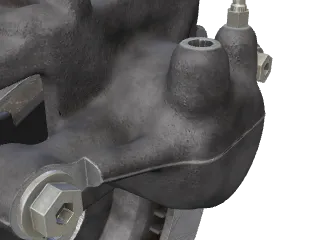
One wheel or both fronts · disc brakes
The piston cannot slide back into its bore, because of corrosion behind a damaged dust boot or a seal that no longer pulls it back, so the pad stays against the disc with no pressure in the line. It can show when fitting new pads, as a piston that is very hard to push back.6,13
Open the page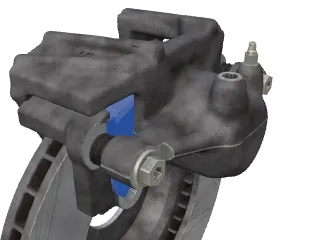
One wheel, one axle or all four · disc brakes
Rust builds up where the ends of the pads sit in the carrier or on their clips until a pad can no longer slide away from the disc. Scraping, filing and greasing the guides, often with new pads and their fitting kit, is the repair owners report.14,8
Open the page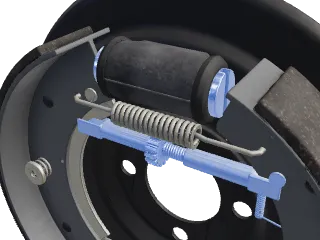
Rear wheels · drum brakes, or a drum handbrake inside the disc
Drum brakes or a drum parking brakeOn drum brakes, and on the small parking brake drum inside some rear discs, the same drag comes from a wheel cylinder that will not retract, shoes dragging on the drum, or an adjuster, cable or equalizer holding the shoes out.15,16
Open the page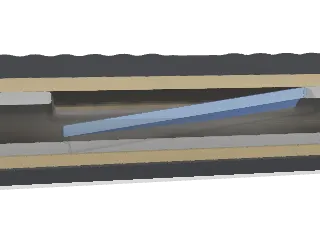
One wheel, or both rears on a van or pickup
A flexible hose can fail inside and act like a one-way valve, letting pressure reach the brake but not back out. Opening the bleed screw while it drags frees the wheel, but pressure held further up looks the same, so the test only points upstream.17,7
Open the page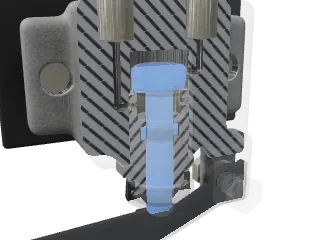
Rear wheels only
A fault inside the valve that limits rear brake pressure, or its linkage set too tight, can let pressure reach the rear brakes but not back. The rears run hot while the fronts stay cool; on one van it began right after work on the regulator's linkage.18,19
Open the page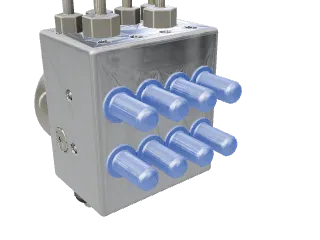
One wheel, a front and the opposite rear, both rears, or all four
The valves in the ABS or stability control unit can hold pressure at a wheel. A brake that behaves normally while the unit is unpowered points at the unit or its inputs.20,21
Open the page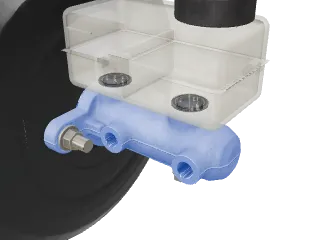
Two or more wheels
When the pedal, a brake light switch, the booster or the pushrod keeps the master cylinder from returning, or debris blocks its ports, the fluid cannot get back to the reservoir and expands as it warms. The brakes then come on by themselves after some driving, on the fronts or on every wheel the master cylinder feeds.22,23
Open the pageSources
- '97 Corolla brakes dragging...bleed 'em?, community.cartalk.com
- Cunfused, community.cartalk.com
- Hinterradbremse schleift, sprinter-forum.de
- PLEASE help.....my brakes, community.cartalk.com
- Honda Prelude only 1 out of 4 wheels braking, community.cartalk.com
- Brake problems | Ford Forums, fordforums.com
- 1999 ford escort zx2, community.cartalk.com
- Bremsen hinten links - Geräusch und Wärmeentwicklung, sprinter-forum.de
- Freezing Brakes - Taurus, community.cartalk.com
- What did I do?, forums.tdiclub.com
- Sprinter schleifen beim rechts Lenken, sprinter-forum.de
- Changing Brake pads and Discs – Jag XF (With pictures) | Page 3 | XF Forum, xfforum.co.uk
- Mein almandinroter 2.3er, w201-ev.de
- Bremsbelag Verschleißanzeige trotz Bremse Kabel iO, sprinter-forum.de
- Problem: Handbremse fest, sprinter-forum.de
- Bremsen Hinterräder heiß, sprinter-forum.de
- "Underdesigned" Brakes Likely Causing Problem (Newspaper Column), community.cartalk.com
- Betriebsbremse hängt fest, sprinter-forum.de
- Beide Hinterbremsen fest, Druck baut sich nicht ab, sprinter-forum.de
- Ford Kuga 2.5 2018 ремонт блока АБС, forum.adact.ru
- Brake seized 2 times in 2 months, community.cartalk.com
- Sticking Front Brakes, community.cartalk.com
- Brake lights stay on | Ford Automobiles, fordforumsonline.com